
Barney Frank, former Democratic congressman from Massachusetts, died on 19 May. One of his greatest achievements was the Dodd-Frank Act of 2010. Most people associate it with financial regulation in the wake of the Great Recession. But there’s a lot more to it than that.
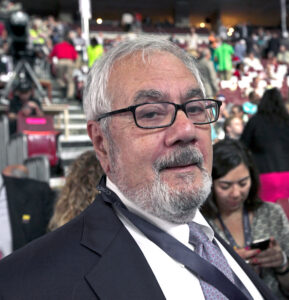
The best he did, in his own mind, was the Dodd-Frank banking reform of 2010 that followed the financial crisis. He was in his top post, head of the House Financial Services Committee. With Christopher Dodd, head of the Senate equivalent, he drew up a bill that reined in the banks from risky lending and provided more protection for consumers, eventually returning $21bn to them for forced foreclosures. Some thought it massively over-complicated (just raising the capital requirements would have been simpler), and Congress later modified some parts, but he had never meant to spare the tender feelings of bankers.—”Barney Frank always took the underdogs’ side,” The Economist, 28 May 2026.
The American dream goes sour
The Great Recession began with a housing bubble. Some people attributed the housing bubble to subprime lending—extending home loans to borrowers who couldn’t afford them. Financial deregulation in the 1990s and adjustable rate mortgages (ARMs) had made home loans more widely available.
However, the housing bubble was due primarily to speculation: buying houses and quickly “flipping” them to other buyers. In some markets, median home values nearly doubled between 2001 and 2006. Between 2004 and 2006, the Federal Reserve Bank raised interest rates to control inflation. That raised the cost of ARM payments and made credit less readily available. In 2007 home prices dropped. Homeowners finding themselves “underwater”, owing more on the mortgage than the house was worth, defaulted on their loans.
Physical deterioration of a foreclosed property…reduces the value of neighboring homes by reducing the appeal of the neighborhood to potential purchasers…[A]bandoned homes may create health and safety concerns: pools become stagnant, pests take over, or the homes become targets for vandalism and squatting…A common example of a health concern created by the foreclosure crisis is the green, mosquito-ridden, stagnant swimming pool….[A] local government may be willing to step in and drain it to prevent the spread of a mosquito-borne disease such as West Nile virus, or to address the safety risk posed to children by an unattended and potentially unguarded pool. —Casey Perkins, “Privatopia in Distress: The Impact of the Foreclosure Crisis on Homeowners’ Associations”,—Nevada Law Journal, 17 June 2010.
Aggregations of subprime loans had become a form of investment derivative. Aggregating these loans obscured the connection between the specific mortgages and the securities they backed, so that the same property might back more than one derivative. When homeowners began to default in great numbers, the derivatives became worthless.
The Great Recession
In the United States, the Great Recession lasted from December 2007 through June 2009. Tighter credit due to higher interest rates limited people’s ability to obtain consumer loans for big-ticket items such as cars. As a result, General Motors and Chrysler declared bankruptcy in 2009. People began to lose their jobs in great numbers.
Naturally the construction industry was particularly hard hit, beginning in 2008. High unemployment, high interest rates, and large numbers of abandoned properties caused demand for housing to collapse. Public-sector spending on infrastructure helped shore up the industry, but most sectors of the market were in trouble. So many people changed jobs or left construction entirely that it was difficult to keep track of my professional network. One colleague turned his part-time commitment to the National Guard into full time—and deployments to Iraq and Afghanistan. Another used what had been a hobby, photography, to support his family. I parlayed secondary skills—writing and editing—into a temporary career change.
Although the Great Recession was officially over by mid-2009, the economic effects persisted long afterwards. As they were able, people and companies paid down their debt rather than spend money. Unemployment remained above its pre-recession rate of 4.7% until May 2016.
Banking regulation—and more
Unlike banks that accept consumer deposits, investment banks had been lightly regulated. When investors wanted their money back, the banks didn’t have the assets to cover it. Banks either collapsed or were deemed “too big to fail,” in which case they received government assistance to prop them up. At a time of high unemployment, this caused a great deal of public resentment. That resentment still shapes politics in many countries, contributing to the subsequent rise of authoritarians and economic populists.
In addition to bailing out financial institutions and automobile manufacturers, governments needed to rein in lending practices. The Dodd-Frank Act focuses mainly on tightening up banking regulations to protect consumers. It established the Consumer Financial Protection Bureau to protect against predatory lending and the Financial Stability Oversight Council to monitor systemic risks. It created the Orderly Liquidation Authority to dismantle failing financial institutions without taxpayer-funded bailouts. And it restricted banks’ ability to speculate with depositor funds. Now derivatives must be traded through regulated clearinghouses. Mortgage lending and business loans must meet stricter requirements, and the Federal Reserve Bank has greater oversight of large institutions.
However, the Dodd-Frank Act also promotes responsible sourcing of potential conflict minerals. Section 1502 designates gold, tantalum, tin, and tungsten as conflict minerals. It requires companies listing on United States stock exchanges to check their supply chains for any of these minerals that originate in the Democratic Republic of Congo or neighboring countries. In conflict zones in these countries, warlords fight for control of mines as sources of revenue. The intent of Section 1502 is to stop fueling conflicts with this money. It does not prohibit companies from obtaining metals from Congo, or even from conflict zones. But the reporting requirement encourages them to obtain the resources from mines outside conflict zones. For the long term, companies are looking for alternate sources.