
“The more you know, the more you realize you don’t know.” Who first made this observation? Many attribute it to Aristotle, others to Einstein. Anyone who studies any subject in depth will come to realize that new knowledge raises further questions. A least in science, there’s always more to learn.
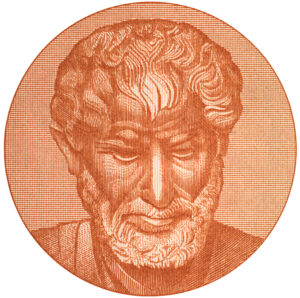
Among his other accomplishments, Aristotle was a highly capable scientist. He classified more than 500 species of insects and animals. Although some of his findings were based on superstition, many still hold up. His willingness to admit his own ignorance when evidence was lacking, and his emphasis on observation over theory when the two contradicted one another, set an example for us today.
The Dunning Kruger effect
The Dunning Kruger effect is the overconfidence that frequently characterizes those whose mastery of a topic is minimal. Cornell psychologists David Dunning and Justin Kruger first became interested in the topic when they learned of an astonishingly inept bank robber. The man had read that lemon juice functions as invisible ink. He reasoned that if he put lemon juice on his face, it would be invisible, and he could rob banks anonymously. This misunderstanding soon cost him his freedom.
Dunning and Kruger found that people who perform in the bottom quartile tend to overrate their ability far more than those with greater skill. There is some debate as to whether greater skill necessarily includes metacognition. That is, knowledge of a topic entails the ability to evaluate one’s own and others’ knowledge more accurately.
We could all point to examples of people whose confidence is exceeded only by their ignorance. To avoid looking like fools, we need to acknowledge when we don’t know.
Advice from a poet
A little learning is a dang’rous thing;
Drink deep, or taste not the Pierian spring:
There shallow draughts intoxicate the brain,
And drinking largely sobers us again.
Fir’d at first sight with what the Muse imparts,
In fearless youth we tempt the heights of arts,
While from the bounded level of our mind,
Short views we take, nor see the lengths behind,
But more advanc’d, behold with strange surprise
New, distant scenes of endless science rise!––Alexander Pope